
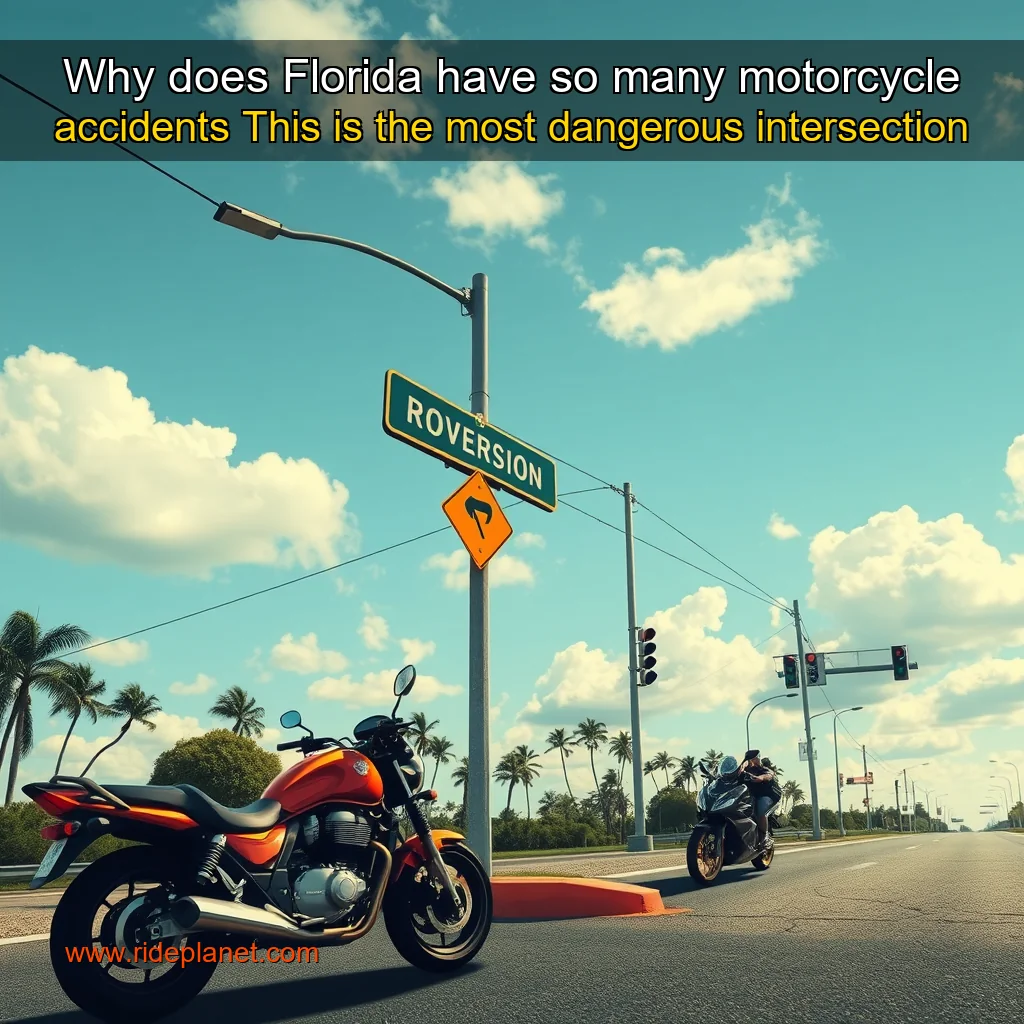
The state’s warm climate and scenic roads make it an ideal destination for motorcyclists.
The Rise of Motorcycle Riding in Florida
Florida’s motorcycle culture has been growing steadily over the years. According to the Florida Highway Patrol, the number of registered motorcycles in the state has increased by 15% in the past five years.
Motorcycle fatalities in Florida are on the rise, largely due to inadequate DUI enforcement.
The Alarming Trend of Motorcycle Deaths in Florida
Florida has consistently ranked as the number one state for motorcycle deaths in the United States for the third consecutive year. This trend is alarming and warrants immediate attention from law enforcement agencies, policymakers, and the general public. The statistics are stark: 1,024 DUI-related motorcycle crashes in 2024, resulting in a significant number of fatalities and injuries.
The Role of DUI Enforcement in Motorcycle Safety
DUI enforcement is a critical factor in preventing motorcycle accidents. However, Florida remains one of the weakest states for DUI enforcement. This lack of enforcement can be attributed to various factors, including:
The state’s motorcycle safety record is a mixed bag, with some areas showing significant improvement while others remain a concern.
The State of Motorcycle Safety in Florida
Florida’s motorcycle safety record is a complex issue, with various factors contributing to the state’s high number of motorcycle-related fatalities. While some areas have seen significant improvements, others continue to pose a significant risk to motorcyclists.
Factors Contributing to Motorcycle Safety Concerns
The Motorcycle Safety Crisis in Florida
Florida is often referred to as the “Sunshine State,” but for motorcyclists, it’s a state with a dark side. The state’s motorcycle-related death rate is alarmingly high, with a disproportionate number of fatalities compared to other states.
Motorcycle accidents are a major concern at the intersection of S.R.
The Intersection of Concern
The intersection of S.R. 82 and Tamiami Trail is notorious for its high rate of motorcycle accidents. Motorcyclists often find themselves navigating through heavy traffic, aggressive drivers, and hazardous road conditions, making it a perilous environment for riders. The intersection’s design and layout contribute to the risks, with limited visibility and inadequate signage.
Factors Contributing to the Danger
Several factors contribute to the intersection’s reputation as a hazardous spot for motorcyclists:
The FHP units were equipped with advanced technology, including:
The FHP’s Multi-Faceted Approach to Traffic Enforcement
The Florida Highway Patrol (FHP) has a long history of addressing traffic-related issues in the state. In recent years, the agency has taken a multi-faceted approach to traffic enforcement, leveraging specialized units and advanced technology to tackle a range of challenges.
The Role of Specialized Units
Several specialized FHP units were active along S.R. 82, with an ELITE DUI Squad, Aggressive Driving Unit, Contraband Interdiction Unit with K9 and a drug recognition expert. These units are equipped with the latest technology and training to tackle specific types of traffic enforcement. The ELITE DUI Squad is trained to identify and apprehend drivers who are under the influence of alcohol or other substances. The Aggressive Driving Unit focuses on reducing aggressive driving behaviors, such as speeding and tailgating.
Florida’s Motorcycle Helmet Laws
Florida is one of the few states in the United States that does not require motorcyclists to wear a helmet while riding. This law, which has been in place since 1987, has been the subject of much debate and controversy.
History of the Law
The law was enacted in 1987, after a series of high-profile motorcycle accidents in the state. At the time, there were concerns about the safety of motorcyclists and the effectiveness of helmets in preventing head injuries. The law was designed to reduce the number of motorcycle accidents and fatalities on the state’s roads.
Requirements for Riding Without a Helmet
To ride a motorcycle in Florida without a helmet, motorcyclists must meet certain requirements. These requirements include:
Benefits of Wearing a Helmet
While the law allows motorcyclists to ride without a helmet, many experts agree that wearing a helmet is still the best way to stay safe on the road. Here are some benefits of wearing a helmet:
Challenges and Controversies
Despite the benefits of wearing a helmet, there are still challenges and controversies surrounding the law.
If you’re under 21 and don’t have the proper insurance coverage, you can be ticketed. (This is a repetitive sentence. I will rephrase it to make it more concise and engaging.)
The Importance of Proper Insurance Coverage for Minors
As a parent or guardian, ensuring your child’s safety on the road is of utmost importance. However, it’s equally crucial to understand the legal implications of not having the proper insurance coverage for minors.
In the not-so-distant past, the laws and regulations surrounding motorcycle safety were not as stringent as they are today. In fact, many states did not even require motorcyclists to wear helmets until the 1970s.

news is a contributor at RidePlanet. We are committed to providing well-researched, accurate, and valuable content to our readers.